Antibiogram · BrCAST-EUCAST
Antibiogram:the halo becomes a report in seconds
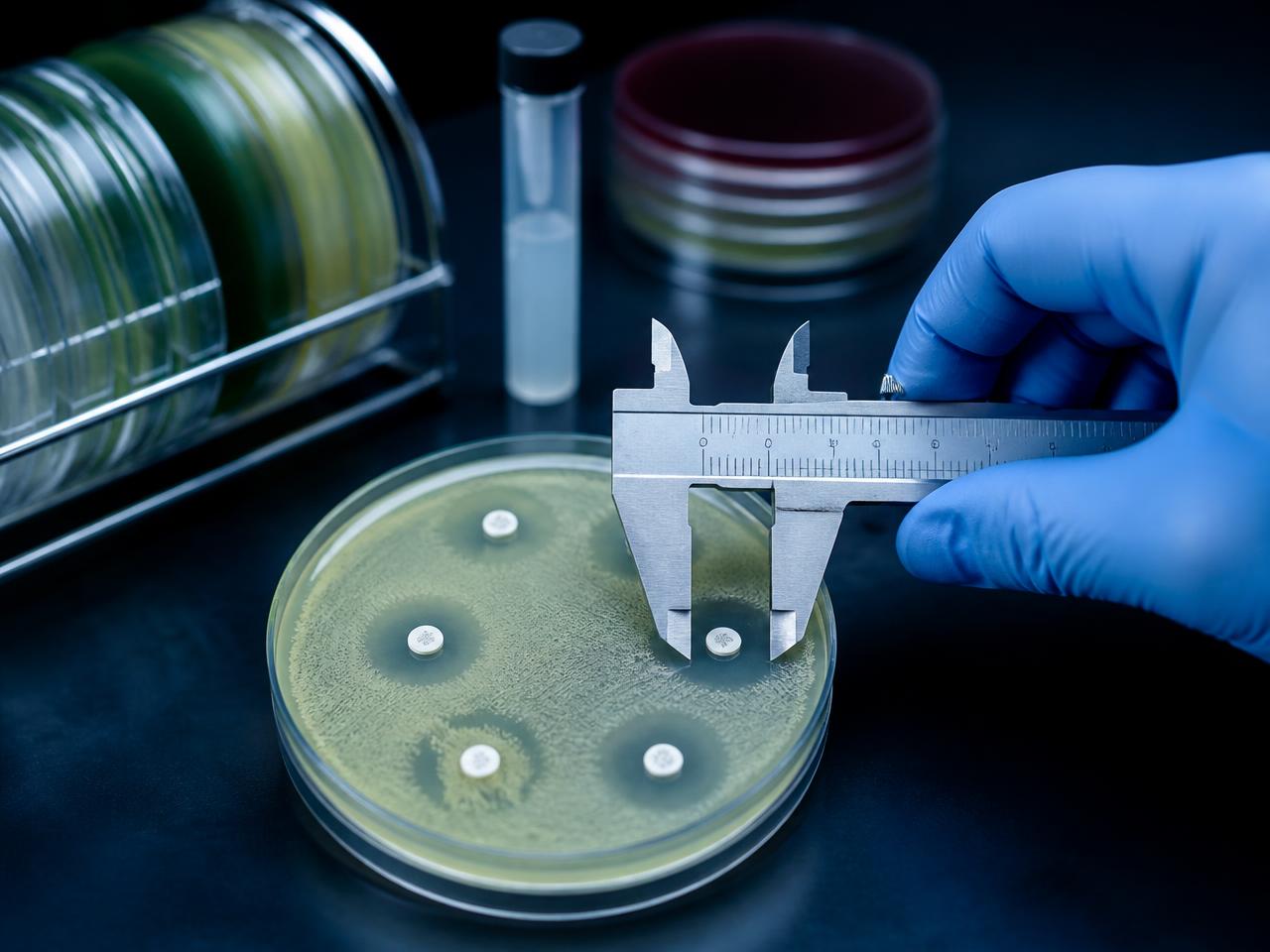
Enter the diameters measured on the plate and receive the full S, I, or R antibiogram using BrCAST breakpoints, with applied criteria and bench notes for each agent.
Practical Microbiology
85 pages of laboratory routine: culture media, staining, biochemical identification, BrCAST antibiogram, solved calculations, exercises, and real cases.
- ✓9 chapters of step-by-step protocols
- ✓Calculations solved line by line
- ✓40 exercises with commented answers
- ✓12 routine case studies
- ✓Free updates
The BrCAST halo interpreter
Choose the isolate group — Enterobacterales, Pseudomonas aeruginosa, Staphylococcus, Enterococcus, or Streptococcus — fill in the disc batch used on the plate, and the site returns the category for each antimicrobial, the applied breakpoint, and the consolidated report ready for review.
By disc batch
Fill in the entire isolate panel at once, just like on the plate.
Criterion at a glance
Each result shows the applied cut-off, e.g.: S ≥ 22 mm · R < 16 mm.
Bench notes
Cefoxitina as MRSA marker, D-test, screenings and confirmation alerts.
Identification
Rugai with lysine tube interpreter (IAL) for presumptive identification of Enterobacterales and non-fermenters.
Access →02Antibiogram
The halo becomes a report in seconds. Interpreter aligned with current BrCAST-EUCAST breakpoints.
Access →03Microorganisms
Searchable catalog of routine agents: identification, culture, intrinsic resistances, and bench alerts.
Access →Get the agars guide
I'll send the guide to the main agars used in the laboratory: composition, purpose, colony appearance, and incubation conditions.
8–10 mL
per blood culture bottle in adults
≥10⁵ UFC/mL
classic cut-off in symptomatic midstream urine
0,5 McFarland
inoculated within 15 minutes
4 mm
Mueller-Hinton thickness