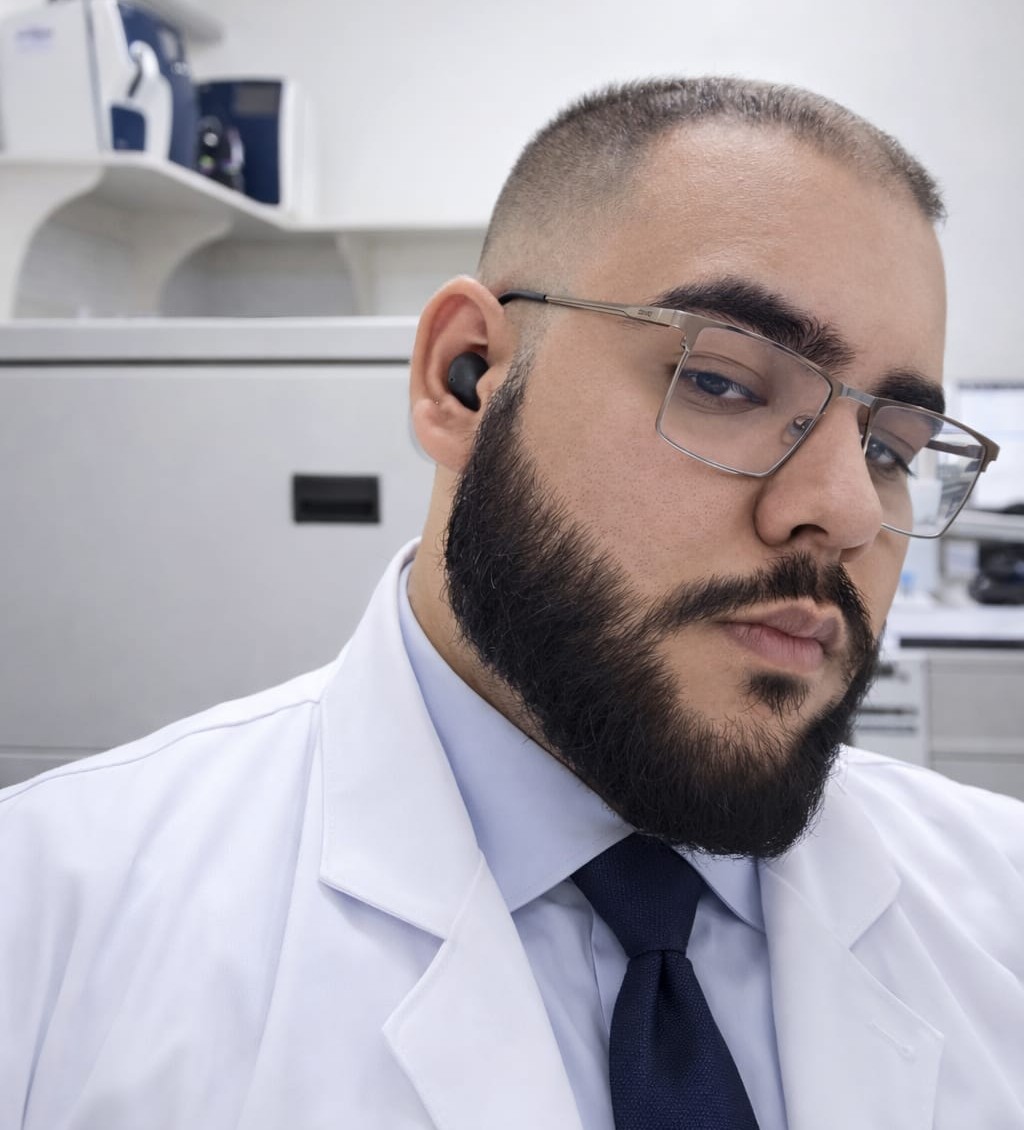
My day is filled with blood cultures that must be reported during the same shift, urine cultures that require a decision between infection and contamination, Gram stains read under time pressure to guide empirical therapy, and antibiograms that directly inform prescriptions.
This website was born in that setting. I realised that most Portuguese-language material treats microbiology as an exam subject — memorising morphology and listing culture media — while very little explains what truly matters at the bench: why bottle volume changes blood-culture sensitivity, why urine-culture breakpoints depend on collection method, and why a 15-minute delay after preparing a McFarland suspension can shift an inhibition zone.
So I write what I wish I had read at the beginning: the action to take, the clinical reasoning and the calculation ready to use. The calculators exist because errors in CFU/mL and dilution calculations are among the quietest errors in the laboratory. The tips come from routine practice, not from a study guide. The microorganism catalogue covers what matters at the bench: how each organism grows, what it can be confused with and what must never be reported as susceptible. This same material, explored in greater depth, became the e-book Practical Microbiology: The Bench Guide.
Nothing here replaces your laboratory's SOPs or current quality-control standards. This is supporting material, written by someone at the bench for people at the bench.